A Retired Pelvic Floor Physiotherapist Who Has Helped Over 200 Women Regain Bladder Control Reveals the Daily Practice That Stops the Leaking That Childbirth Started and Time Never Fixed. Alongside Your Doctor.
Her youngest is 5. She still leaks when she sneezes. When she coughs. When she laughs too hard. When she picks up her child. 5 years postpartum and she wears a liner every day. Not for her period. For the leaks her body never stopped producing.
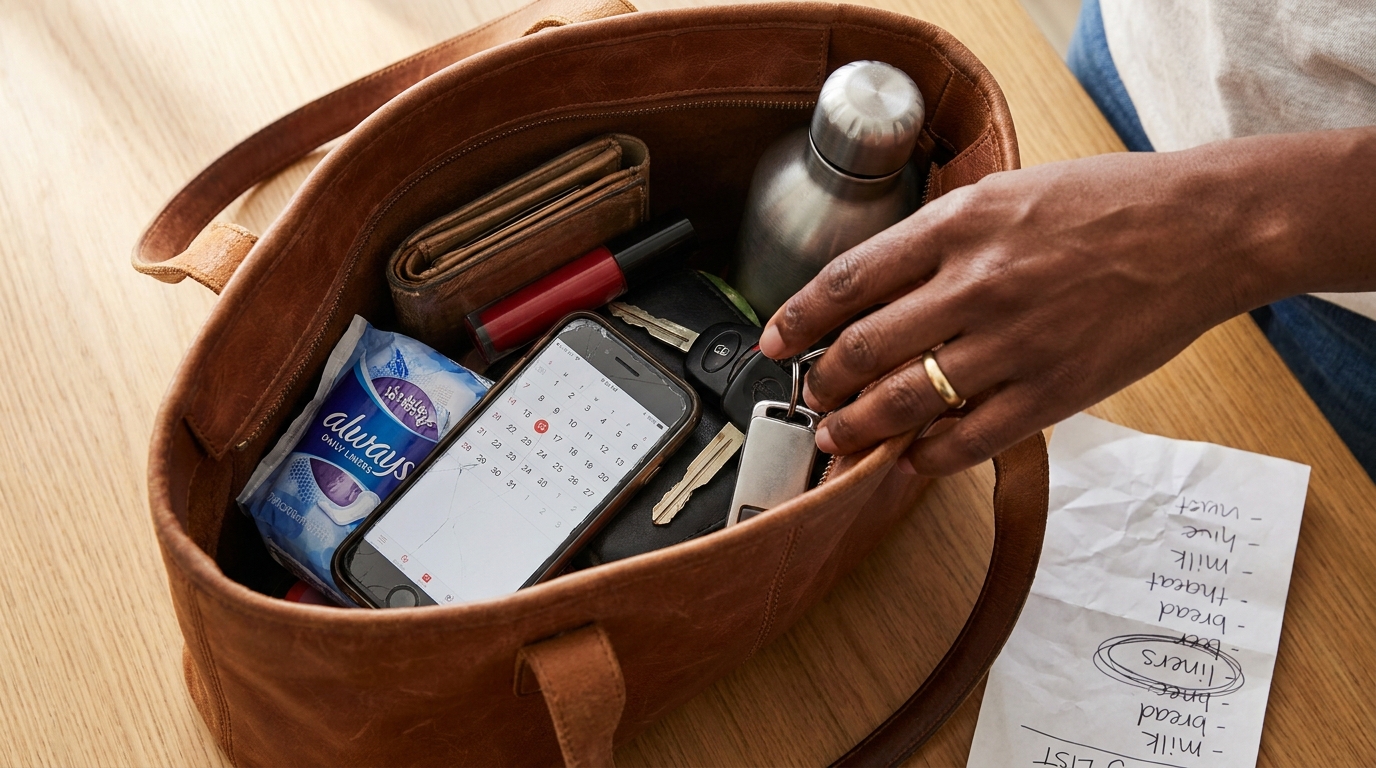
The liner.
You put it on every morning. Before your underwear. Before your clothes. Before you leave the house. The panty liner that has been part of your morning routine for years. Not a menstrual pad. Not for your period. For the urine that leaks when your body is put under any pressure: a sneeze, a cough, a laugh, a jump, lifting your child, climbing stairs too quickly, running for a bus.
You gave birth. Your body pushed a human being into the world. And something tore, stretched, or weakened in the process — the pelvic floor muscles that hold your bladder closed. The muscles that are supposed to activate automatically when you sneeze, keeping everything sealed. Those muscles were damaged during delivery. And 5 years later, they still haven't recovered. Because nobody taught you how to rehabilitate them. The doctor said "do Kegels." You did them. In the car. At your desk. Randomly. Without knowing if you were squeezing the right muscles, the right way, for the right duration, at the right progression. The leaking continued.
"I am 37. My youngest is 5. I have been leaking urine for 5 years. Not a lot. Not a flood. A few drops. Sometimes more. Every sneeze. Every cough. Every time I laugh hard. Every time I pick up my son. Every time I jump. Every time I run. A few drops that require a liner. Every single day."
"I have spent N180,000 on liners in 5 years. N3,000 per month on panty liners. Not sanitary pads. Incontinence liners. I buy them in bulk. I carry extras in my bag. I change them at work. I have a system: morning liner, midday change, evening change. A 37-year-old professional woman with a system for managing urine leakage."
"The worst moment: my daughter's birthday party. I was jumping on the bouncy castle with the children. I felt the leak. Not drops. A visible wet patch. I stopped jumping. I told the children 'Mummy is tired.' I walked to the bathroom. Changed the liner. Changed my underwear. Went back to the party. Smiled. Nobody knew. But I knew. And I haven't jumped since."
If you still leak urine years after childbirth, if you wear a liner every day, if you have stopped jumping, running, or laughing freely, if "do Kegels" didn't work because nobody taught you the correct technique, keep reading. Alongside your doctor.

Tolu A.
37. Lagos. Youngest is 5. Still leaking. Until Mrs. Adebayo showed her: the muscles weren't broken. They were untrained. "Do Kegels" is not training. The method is.
Sneeze
The most common trigger. Every sneeze produces drops. She braces before sneezing. Crosses her legs. Sometimes it works. Sometimes it doesn't.
Cough
A cold becomes a week of constant leaking. Every cough. Every throat-clear. The liner fills faster during flu season.
Laugh
She controls her laugh now. Not because she's not amused. Because a full, uninhibited laugh produces leaks. Joy filtered through bladder control.
Jump / Run
Bouncy castle: never again. Running for the bus: risk. Exercise: modified. Any high-impact movement is a leak trigger.
Lift
Picking up her child. Carrying groceries. Any abdominal pressure pushes down on a pelvic floor that can't hold. The heavier the load, the more the leak.
Stairs
Climbing quickly. Taking stairs two at a time. The impact and the effort. She takes them slowly now. One at a time. Not because of fitness. Because of leakage.
leaking
liners
a liner
"Do Kegels" (5 Years)
The standard advice. Squeeze. Hold. Release. But WHICH muscles? How long? How many? What progression? The doctor said "do Kegels" without teaching the technique. She squeezed her thighs. Her buttocks. Her abdomen. Not her pelvic floor. Wrong muscles. No improvement.
YouTube Pelvic Floor Videos
Watched 3 different exercise videos. Each taught a different technique. No way to know which was correct. No progression plan. No way to verify she was engaging the right muscles. Random exercises without a structured rehabilitation.
Panty Liners (N180,000)
Management, not treatment. The liner catches the leak. It doesn't stop the leak. 5 years of catching without addressing. N3,000/month on a product that manages the symptom permanently instead of strengthening the cause.
"It'll Get Better With Time"
The most damaging advice. "Your body will recover." 1 year became 2. 2 became 3. 3 became 5. Time alone doesn't rehabilitate a damaged pelvic floor. Time without targeted exercise allows the muscles to weaken further.
Avoiding Triggers
Stop jumping. Limit running. Control laughter. Take stairs slowly. Brace before sneezing. She restructured her entire physical life around leak avoidance. The solution became a cage.
Accepting It
"This is just life after childbirth." The most common resignation. But postpartum incontinence is NOT inevitable. The pelvic floor can be retrained at any point after delivery. 5 years postpartum. 10 years. The muscles still respond to correct training.
A women's health event at the clinic. Mrs. Adebayo Olufunke. 56. Retired after 28 years as a pelvic floor physiotherapist. She had helped over 200 women recover bladder control after childbirth. She knew which women recovered and which didn't. And she knew the difference was not willpower. It was technique.
Finding the Floor
Before any strengthening: learning to identify and isolate the correct muscles. Most women squeeze their buttocks, thighs, or abdomen instead. The method teaches specific techniques to locate and activate ONLY the pelvic floor — the sling of muscles that holds the bladder closed. Until you can isolate these muscles, every exercise is wasted on the wrong ones. This is the step Kegels skip.
The Foundation Holds
Slow, sustained contractions of the correctly identified muscles. Not the rapid squeeze-release most women learn from Google. Long holds (5-10 seconds) that build endurance in the slow-twitch fibres — the fibres responsible for maintaining bladder closure during daily activities. 10 minutes daily. The foundation that makes everything after it possible.
The Quick Response
Fast, strong contractions that train the fast-twitch fibres — the fibres responsible for sudden closure when you sneeze, cough, or laugh. This is the missing piece: the muscles need BOTH endurance (holding) AND speed (snapping shut). The sneeze-leak stops when the fast-twitch response is trained. The method progressively builds speed and strength together.
The Pressure Training
Contracting the pelvic floor WHILE performing leak-triggering activities: coughing, lifting, bending, climbing stairs. This is functional training — the muscles learn to activate during the exact moments they are needed. Not in a quiet room doing exercises. During real life. The sneeze. The cough. The lift. The muscles fire when they need to fire.
The Daily Maintenance
After 8 weeks of structured rehabilitation, a 5-minute daily maintenance routine that keeps the pelvic floor strong. Like brushing your teeth: short, daily, non-negotiable. The muscles stay trained. The bladder stays controlled. The liner becomes unnecessary. Alongside your doctor.
It happened before she thought about it. A sneeze at her desk. Sudden. Unplanned. She didn't have time to cross her legs. She didn't brace. She just sneezed. And then she checked. Dry. Not because she braced. Because the pelvic floor muscles — correctly identified and strengthened for 3 weeks — contracted automatically. The way they were supposed to. The way they did before childbirth.
"I sat at my desk after the sneeze and I didn't feel the drops. I checked. Dry. I sneezed without bracing for the first time in 5 years and nothing happened. The muscles held. Not because I willed them to. Because 3 weeks of correct training had started to rebuild the automatic response that childbirth disrupted."
A joke at a colleague's birthday lunch. The whole table laughed. She laughed. Not the controlled, careful laugh she had trained herself to produce. A real laugh. Full. Uninhibited. The laugh that used to produce leaks. She laughed. Then she checked. Dry.
"I laughed without thinking about my bladder. For 5 years, every laugh was filtered: how hard can I laugh before I leak? The filter was gone. The laugh was free. The muscles held. The fast-twitch training had given me back my laugh."
A Monday morning. She got dressed. Underwear. Clothes. She was halfway to the kitchen before she realised: she hadn't put on the liner. Not because she forgot. Because the habit was breaking. The liner had been the first thing she put on every morning for 5 years. On this Monday, her body had gone through the morning routine without it. Because the leaks had stopped.
"I stood in the kitchen and realised I wasn't wearing a liner. I waited for the panic. It didn't come. Because I had sneezed yesterday without leaking. I had coughed this morning without leaking. I had picked up my son last night without leaking. The muscles held. Every trigger. The liner wasn't necessary because the leaks weren't happening."
"Did the method cure incontinence? No. The pelvic floor is a muscle group. Like any muscle, it needs maintenance. The 5-minute daily practice keeps it strong. But the structured rehabilitation — finding the muscles, building endurance, training speed, practising under pressure — rebuilt what 5 years of 'do Kegels' and liner management never addressed. The liner cost N3,000/month. The maintenance costs 5 minutes/day. One treats the leak. The other stops it. Alongside my doctor."
"Finding the Floor was the breakthrough. I had been squeezing my buttocks for 3 years thinking I was doing Kegels. The method taught me the correct muscles in the first week. Everything changed because the foundation was finally right."
"The Quick Response training stopped my sneeze-leaks by Week 4. The fast-twitch training is the missing piece. Slow Kegels build holding power. Fast contractions build the snap-shut response. You need both. Nobody tells you that."
"I'm in London. Nigerian. My GP said 'do Kegels.' That was the entire instruction. The method gave me the technique, the progression, and the functional training the GP never provided. My referral to pelvic floor physio was a 6-month wait. The method started immediately."
"7 years postpartum. I thought it was too late. Mrs. Adebayo's method says the pelvic floor responds to correct training at ANY point after delivery. 7 years of damage. 8 weeks of rehabilitation. The liner is gone."
"The Pressure Training in Week 7-8 is genius. Practising the contraction WHILE coughing, lifting, climbing stairs. Functional. Real. The muscles learn to fire when they need to fire. Not in a quiet room. During real life."
"I jumped on a trampoline with my children last Saturday. I haven't jumped in 4 years. Dry. The bouncy castle mother is back. The liner is gone. The method gave me back the things I stopped doing. Alongside my doctor."
I documented Mrs. Adebayo's method because no mother should wear a liner for 5 years because her doctor said "do Kegels" without teaching her how. No mother should spend N180,000 on liners that manage the symptom while the cause goes unrehabilitated. No mother should stop jumping, stop running, stop laughing freely because childbirth damaged muscles that nobody taught her to rebuild. And no mother should believe that leaking is "just life after childbirth." It is not. The pelvic floor can be retrained. At any point. 5 years. 7 years. 10 years postpartum. The muscles respond to correct training. Not random squeezing. Correct, progressive, structured training. 8 weeks. Alongside your doctor.
The Dry-Again Method
The step-by-step daily practice for mothers who still leak urine years after childbirth. Alongside your doctor.

Finding the Floor (Muscle Identification)
The specific techniques to locate and isolate the pelvic floor muscles. The step Kegels skip. The foundation everything builds on.
The Foundation Holds (Endurance Training)
Slow, sustained contractions. 5-10 second holds. Building the slow-twitch fibres for all-day bladder support.
The Quick Response (Speed Training)
Fast contractions for the snap-shut response. The training that stops sneeze-leaks, cough-leaks, laugh-leaks.
The Pressure Training (Functional Rehabilitation)
Contracting during real triggers: coughing, lifting, climbing. The muscles learn to fire when you need them.
The Daily Maintenance (5 Minutes)
The short daily routine that keeps the pelvic floor strong permanently. Like brushing your teeth. 5 minutes. Non-negotiable.
Instant download. Both bonuses included. 14-day guarantee.
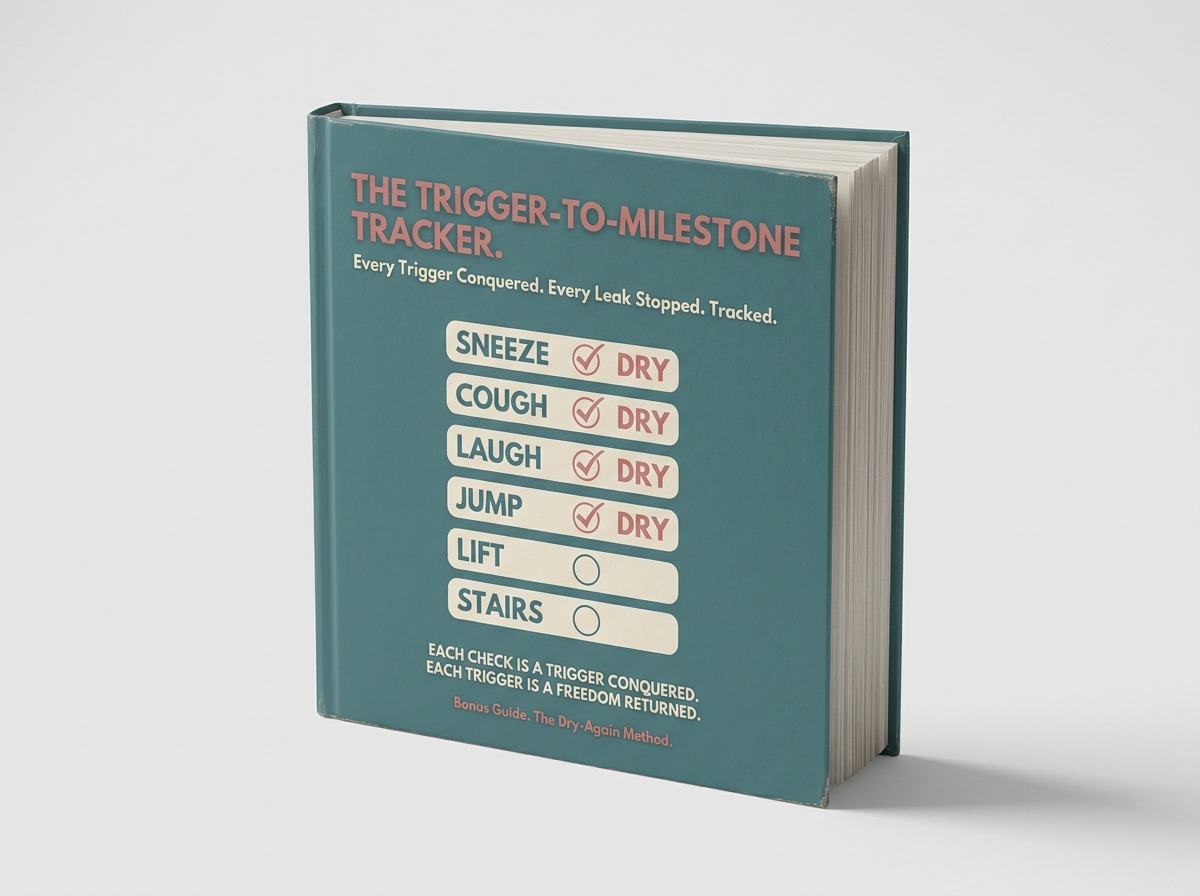
The Trigger-to-Milestone Tracker
Track each leak trigger (sneeze, cough, laugh, lift, stairs) as it goes from "leaks" to "dry." Each conquered trigger is a milestone. The tracker shows your pelvic floor strengthening in real data.

The Doctor's Conversation Guide
What to ask your doctor about pelvic floor rehabilitation. When to request a physiotherapy referral. What pelvic floor assessment involves. One page. Productive appointments.
Unconditional 14-Day Money-Back Guarantee
If the method doesn't give you a clear, progressive pelvic floor rehabilitation system you can follow alongside your doctor, full refund. No questions asked. Keep both bonuses. This guarantee promises a structured method, not instant results. Pelvic floor rehabilitation takes 6-8 weeks of consistent practice.
The method or your money back. Alongside your doctor.
Another Year of the Liner
Another N36,000 on liners. Another year of bracing before sneezes. Another year of controlled laughter. Another year of skipping the bouncy castle. Another year of "do Kegels" without a technique, a progression, or a result.
The liner manages the leak. It doesn't stop the leak. And time alone doesn't rehabilitate the muscles. 5 years proved that.
8 Weeks. The Muscles Retrained.
Week 3: Sneeze without bracing. Dry. Week 4: Cough without leaking. Week 6: Laugh without filtering. Week 8: The liner goes. The muscles hold. Every trigger conquered.
N9,800. Less than 3 months of liners. 8 weeks. The leaking stops because the muscles are finally trained correctly. Alongside your doctor.
P.S. #1: How many liners are in your bag right now? If the answer is more than zero, the method starts with Finding the Floor. N9,800 to start the rehabilitation that "do Kegels" never provided.
P.S. #2: When was the last time you jumped? If you can't remember, or if the answer involves a calculation of risk, the Pressure Training in Week 7-8 puts jumping back on the table. Literally.
P.S. #3: Mrs. Adebayo: "I have helped over 200 women recover bladder control. Every single one had been told 'do Kegels.' Every single one was doing them wrong. The muscles are invisible. You cannot see them working. You must be taught to feel them. That is Week 1. Once you find the floor, everything changes. The muscles respond. At any age. At any point postpartum. 5 years. 10 years. The pelvic floor does not expire. It waits to be trained correctly." N9,800. 8 weeks. Alongside your doctor.